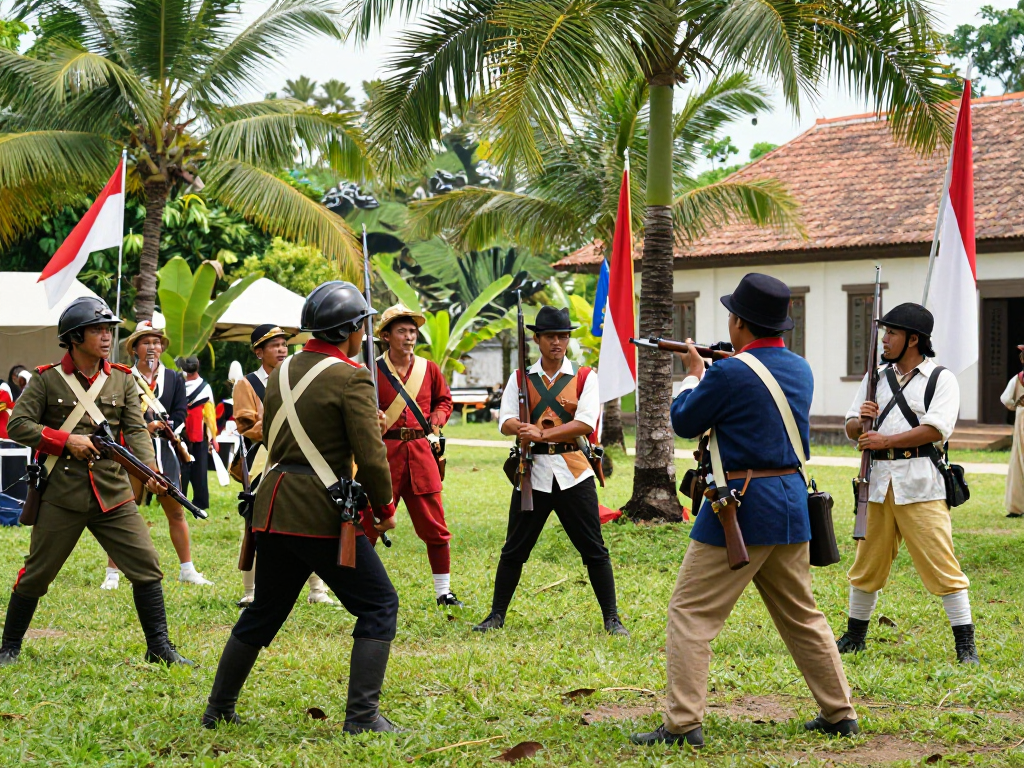
The Colonial Era: A Background
The history of Indonesia is deeply entwined with Dutch colonization, which began in the early 17th century and lasted for over three centuries. This period was marked by significant socio-economic changes and cultural shifts, as the Dutch sought to capitalize on the rich resources of the Indonesian archipelago. Understanding this era is crucial for grasping the complexities of the subsequent conflicts that emerged during Indonesia's struggle for independence.
As we explore the nuanced relationship between Indonesia and the Netherlands, it becomes evident that the colonial legacy is a critical aspect of Indonesia's national identity and historical narrative. To delve deeper into this complex history, rokok88 rtp offers insightful resources that illuminate the significant historical events and societal impacts of Dutch colonization.
Understanding Dutch Colonization in Indonesia
The Dutch East India Company (VOC) established its presence in Indonesia primarily for trade in spices, which were immensely valuable in Europe. The VOC's monopoly over the spice trade enabled it to exert considerable influence over local economies and governance. The Dutch implemented a colonial administration that integrated economic exploitation with military control, resulting in various forms of resistance from indigenous populations.
Impacts on Indigenous Culture and Society
The effects of Dutch colonization were profound and multifaceted. Indigenous cultures faced significant erosion due to the imposition of foreign governance, religion, and economic systems. Traditional practices were often marginalized, and local elites were co-opted into the colonial system, creating a new social hierarchy that favored Dutch interests. The introduction of cash crops transformed agricultural practices, leading to both economic dependency and societal upheaval.
Key Historical Figures in the Conflict
Throughout the colonial period, many Indonesian leaders emerged as pivotal figures in resisting Dutch rule. Figures such as Raden Ajeng Kartini, who advocated for women's rights and education, and Diponegoro, who led the Java War, played crucial roles in shaping the national consciousness. Their legacies continue to resonate in contemporary discussions about Indonesia's identity and resistance history.
Key Events of the Dutch-Indonesian War
The struggle for independence in Indonesia intensified during the early 20th century, leading to significant uprisings and a growing nationalist movement. The events that unfolded during this period were pivotal in shaping modern Indonesia.
The Indonesian National Awakening
The early 1900s marked the beginning of the Indonesian National Awakening, characterized by increased political consciousness among the populace. Organizations such as Budi Utomo and the Indonesian National Party (PNI) were instrumental in fostering a sense of national identity and resistance against colonial rule. This awakening laid the groundwork for a more organized and unified effort to challenge Dutch authority.
Critical Battles and Turning Points
Several critical battles defined the Dutch-Indonesian conflict. The Jakarta uprising in 1945, following the end of World War II, was a turning point that galvanized the Indonesian populace. The proclamation of independence by Sukarno and Hatta marked the official start of a revolutionary struggle against Dutch colonialism. Additionally, the guerilla warfare tactics employed by Indonesian fighters were instrumental in countering the superior military might of Dutch forces.
International Reactions and Involvement
The global context of post-World War II also influenced the Dutch-Indonesian War. The emerging Cold War dynamics, alongside decolonization movements across Asia and Africa, garnered international attention and support for Indonesia's cause. Nations and organizations worldwide advocated for Indonesian sovereignty, further complicating the colonial narrative for the Dutch.
Strategies Employed in the Conflict
Both the Dutch and Indonesian forces utilized a variety of strategies in the conflict, each reflecting their respective strengths and weaknesses.
Military Tactics of the Dutch Forces
The Dutch military relied on conventional warfare tactics, leveraging their advanced weaponry and trained forces. They employed strategic fortifications and direct military engagement to suppress uprisings, often resorting to violent reprisals against civilian populations to instill fear and maintain control.
Resistance Strategies by Indonesian Leaders
Indonesian leaders adapted guerrilla tactics, utilizing the terrain and local knowledge to their advantage. The decentralized nature of the resistance allowed for flexibility and resilience in the face of Dutch military operations. Moreover, they emphasized unity among diverse ethnic groups, which was critical in building a cohesive front against the Dutch.
Propaganda and Media Influence
Both sides recognized the power of propaganda during the conflict. The Dutch sought to portray their actions as benevolent, while Indonesian leaders utilized media to galvanize support and international sympathy. Leaflets, radio broadcasts, and later, films played significant roles in shaping public perceptions of the conflict.
The Road to Independence
Indonesia's path to independence was fraught with challenges, yet it ultimately culminated in a hard-won victory for the nationalist movement.
Negotiations and Peace Efforts
After years of conflict, international pressure led to negotiations between Indonesian leaders and the Dutch government. The Round Table Conference in 1949 resulted in the formal transfer of sovereignty to Indonesia, establishing the nation as a recognized entity on the global stage. This moment was significant not only for Indonesia but also for other nations striving for independence worldwide.
Recognizing Indonesia’s Sovereignty
The recognition of Indonesia's sovereignty was a critical step towards nation-building. It allowed Indonesia to establish its own governance structures and pursue economic development independent of colonial constraints. The political landscape of Indonesia evolved rapidly, as the newly formed government sought to unify diverse regions and cultures under one national identity.
Post-War Reconciliation and Relations
In the years following independence, Indonesia faced the task of reconciling its colonial past with its new identity. Diplomatic relations with the Netherlands were initially strained but gradually improved over the decades. Today, both countries strive to foster mutual understanding and cooperation, reflecting on their shared history.
Lessons Learned and Future Implications
The Dutch-Indonesian conflict offers critical lessons for contemporary society and the understanding of post-colonial dynamics. As Indonesia moves forward, it can benefit from reflecting on its past and the various factors that shaped its independence.
Addressing Historical Misconceptions
Many misconceptions about colonial history persist, shaping contemporary attitudes. Educating new generations about the complexities of the Dutch-Indonesian relationship is vital to fostering a more nuanced understanding of both countries’ histories.
Impact on Modern Indonesian Identity
Indonesia's struggle for independence has become a cornerstone of its national identity, influencing cultural expressions, political discourse, and international relations. The legacy of resistance and resilience continues to inspire present-day movements for social justice and rights.
Future Relations Between Indonesia and the Netherlands
Looking ahead, the bilateral relationship between Indonesia and the Netherlands presents opportunities for collaboration across various sectors, including trade, culture, and education. Acknowledging their shared history while focusing on mutual growth will be essential in building a sustainable partnership for the future.